Some customers call ADI because they can hear something they cannot see. Several of the reviews below start the same way: a leak heard inside the house, an outside leak with no wet ground, or weeks of hearing a pipe that showed no sign. Rule out the ordinary causes first, because checking them costs nothing.
Checks to do if you can hear water running
- Turn everything off. Taps, showers, washing machine, dishwasher, water softener, outside taps and any irrigation. Wait a few minutes for cisterns and tanks to finish refilling.
- Check every toilet. Look into the pan: a thin ripple of water running down the back means the cistern is leaking through. Lift the cistern lid and listen for the fill valve hissing. A faulty cistern can run all day, and one reviewer’s leak turned out to be exactly that.
- Check the loft tank if you have one. If the ball valve keeps letting water in with nothing running, and the tank is not simply running out through its overflow pipe, water is leaking from the pipes it feeds, often the hot water side. If a smaller second tank keeps refilling, that one feeds the heating.
- Check the boiler pressure gauge if you have a combi or system boiler. If the pressure keeps dropping and needs topping up, water is escaping from the heating, from a hidden pipe, a valve or the boiler’s pressure relief pipe.
- Listen at the stopcock. A hiss at the stopcock with everything off means water is still flowing through it, which points to a leak or something still running.
How to check your water meter for a leak
If you have a water meter, it is the simplest test there is. With everything off, take a reading, use no water for 30 minutes, then read it again. If it has moved, water is escaping somewhere.
Then close your internal stopcock and look again. Check it has shut fully: the kitchen cold tap should run dry. If the meter still moves with the stopcock closed, the leak is on the supply pipe between the meter and your house, usually under the drive, path or front garden. This test works when your meter is outside, near the boundary. If the meter stops, the water is being lost inside. If the toilet and tank checks found nothing, a hidden pipe is the likely cause, and that is the kind of leak a listening survey is designed to find.
Why the sound may not be where the leak is
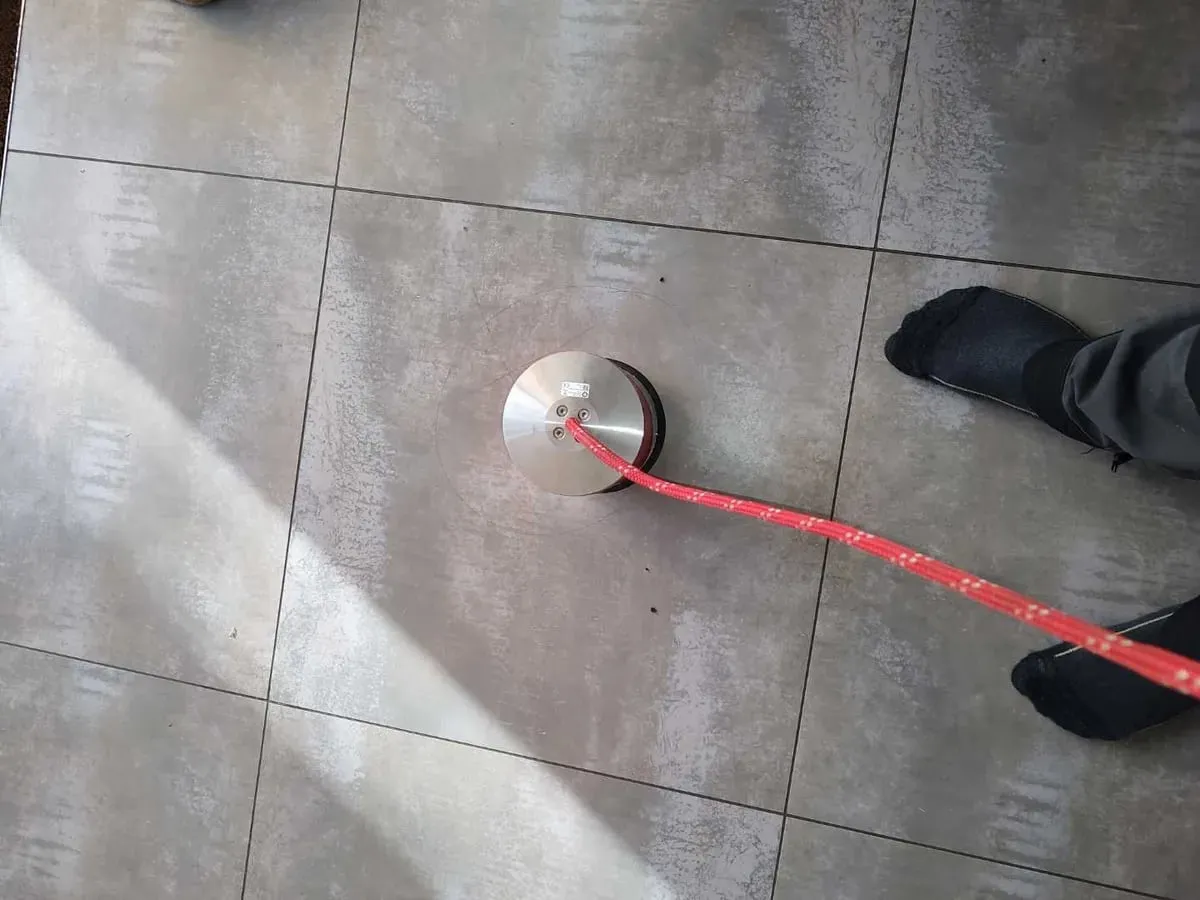
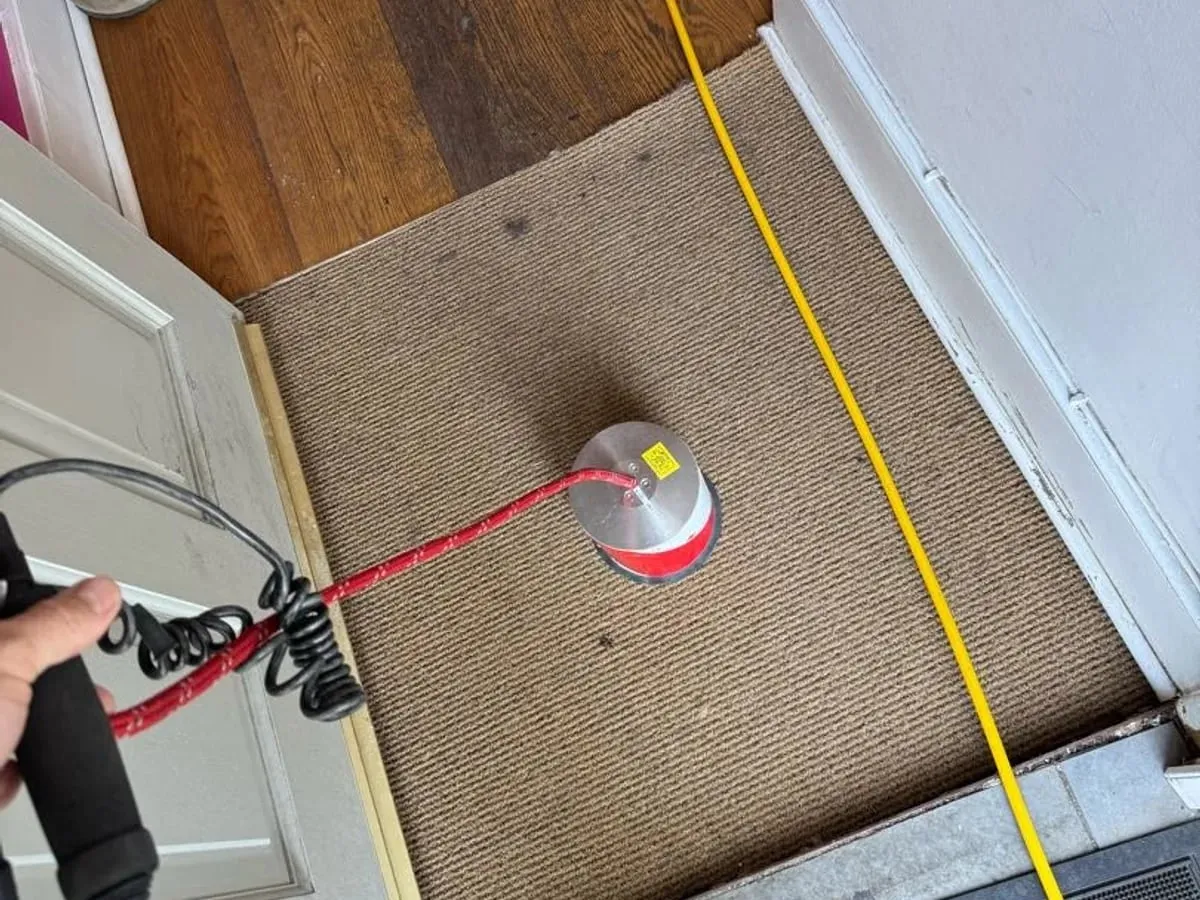
Sound travels a long way along pipes, so where you hear it is a clue rather than an answer. A hiss in the kitchen can come from a leak under the hallway, and in a terrace or semi the sound can even come from next door’s pipes. That is why engineers survey the whole route with a ground microphone and compare levels, instead of opening up where the noise seems loudest to the ear.
Make a note of where and when you hear it, whether it is constant or comes and goes, and anything you have spotted on the meter or the boiler. It all helps the engineer plan the survey.
When to call a leak detection engineer
Call if the meter moves with everything off, if the sound is there day and night, if the boiler keeps losing pressure, or if you have found damp you cannot explain. The sooner a leak is found, the less water gets into floors and foundations. If the leak is inside, turning the water off at the stopcock when you are not using it limits the damage. It will not stop a leak on the supply pipe outside.