When is acoustic leak detection used?

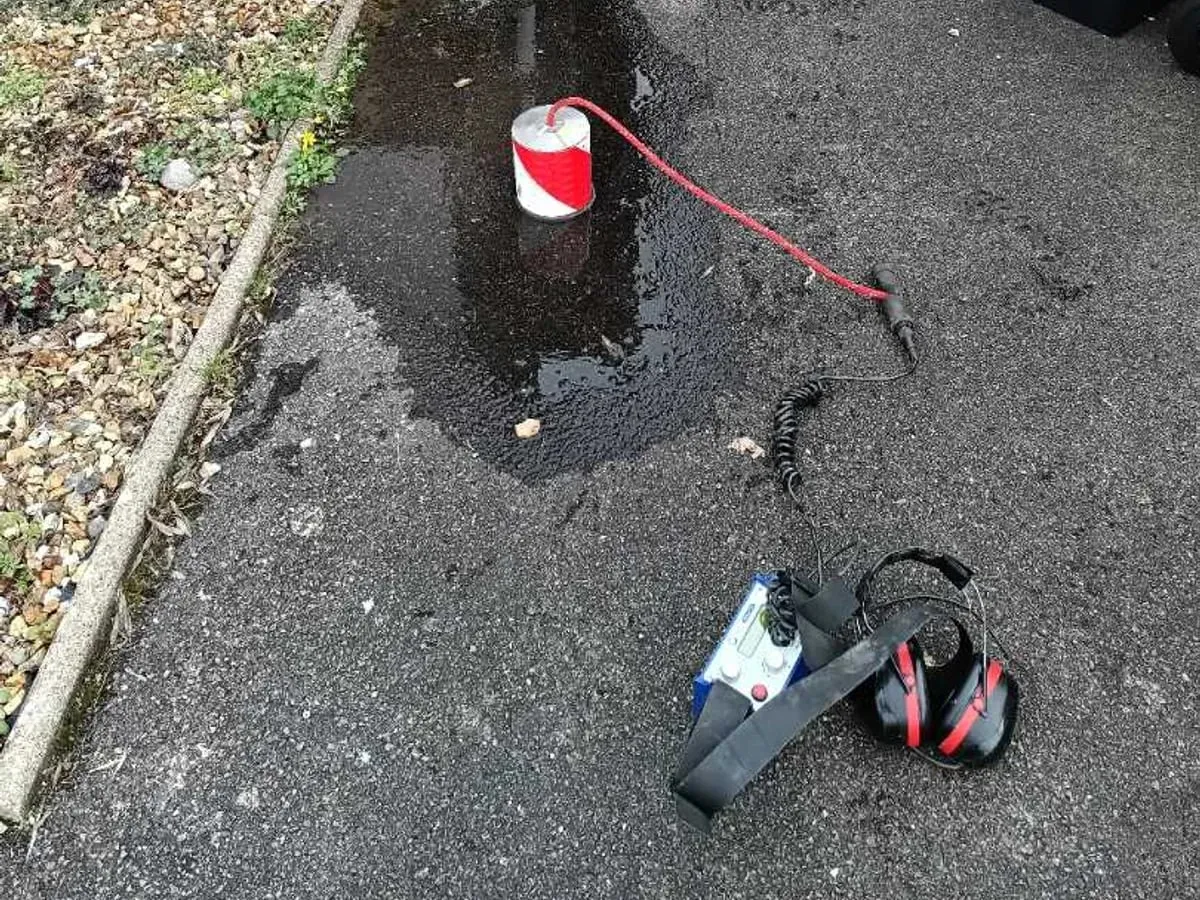
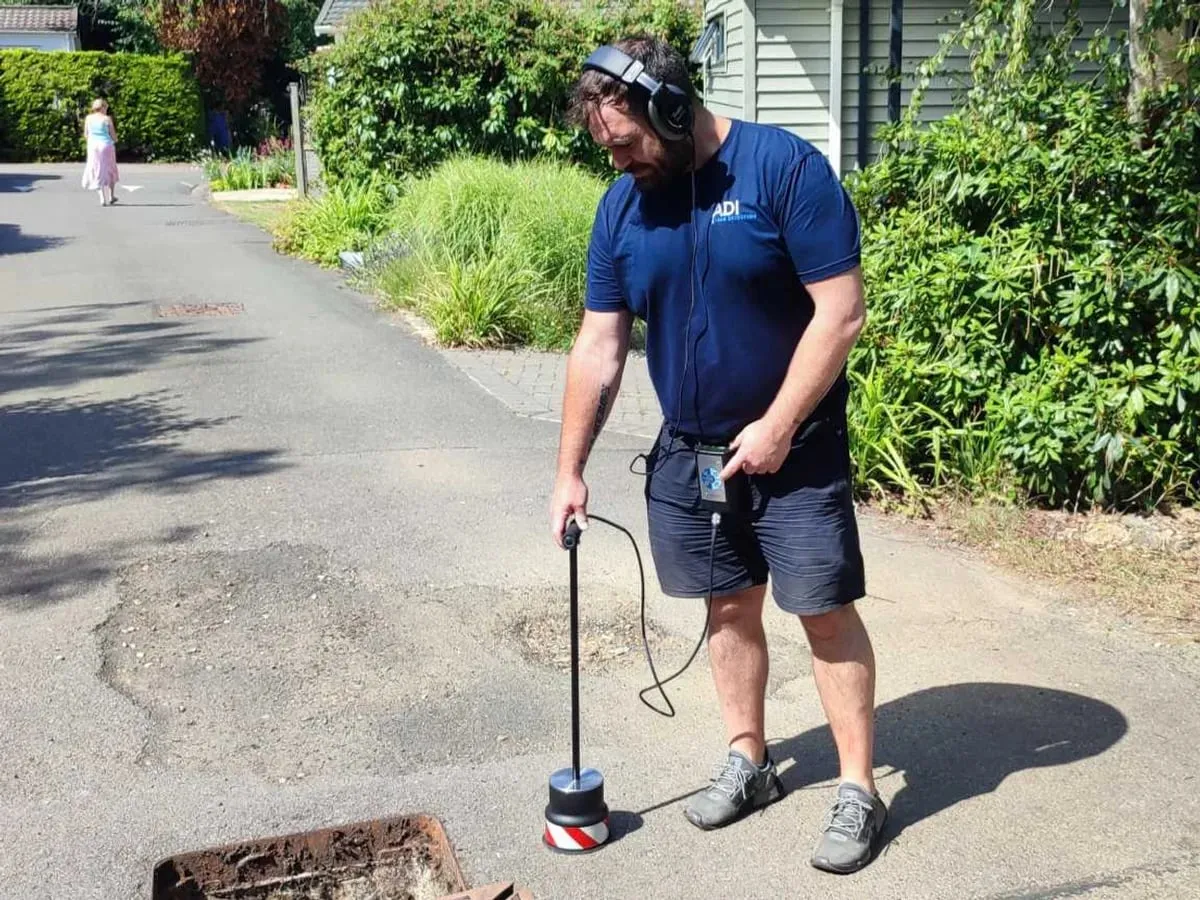
Listening is used whenever there is a pressurised pipe that is leaking somewhere out of sight, and the aim is to find the spot before anything is dug up or lifted.

Not sure if listening will find your leak?

Call 0333 567 2640

Monday to Friday, 7:30am to 6:30pm. The office will tell you which methods suit your leak.

4.7 Excellent on Trustpilot from 1,620 reviews of ADI Leak Detection

Signs you need acoustic leak detection

Most people who end up with an acoustic survey have noticed one of these:

  • The water meter keeps moving with every tap, toilet and appliance turned off.
  • The water company has written to say usage is high, or that a leak has been found on your side of the boundary.
  • The boiler keeps losing pressure and needs topping up every few days, with no drips at the radiators.
  • You can hear water running in the walls or under the floor when nothing is on. (Our guide to hearing water running with the taps off covers the checks to do first.)
  • A damp patch keeps spreading on a floor or wall, or a patch of lawn stays wet in dry weather.
  • Pressure at the taps has dropped, or a pool is losing more water than evaporation explains.

Finding the leak before anything is dug up

The whole point of listening is to find the leak from the surface. Without a leak survey, the choices are to guess where the pipe has failed and start digging, or to replace the entire run. Both are slow, messy and expensive when the pipe runs under a block-paved drive, a kitchen floor or a mature garden.

With a survey, the engineer narrows the leak to a small area first. The aim is to open only that area and leave the rest of the drive, floor or lawn alone.

Acoustic detection alongside tracer gas and other methods

On a buried supply pipe under mains pressure, listening is often the first thing an engineer does after proving the leak, because it can cover a long run from the surface. On other jobs it is the second method: tracer gas may find the general area and listening pins it down, or the other way round. Several of the case studies on this site, such as the Dinmore and Bollington jobs, show exactly that, with two methods pointing at the same spot before anything was dug up.

When another leak detection method goes first

  • Very slow leaks that make little sound are usually found with tracer gas.
  • Leaks on heating pipes in a warm floor can show up clearly on a thermal camera with the heating running.
  • Water coming in from outside, through a roof or wall, is traced with moisture mapping and thermal imaging.
  • Non-pressurised pipes such as drains are checked with cameras and dye.

You do not need to know which method your leak needs. The office asks the right questions when you call and books the survey to suit what you describe.
What customers said about their survey

“Robert attended and carried out both tracer gas and acoustic testing, and was able to locate the leak quickly and accurately.”

Heather L., Trustpilot review, 30 April 2026

“Mark and Scott attended our premises in Collingtree and identified an underground water leak by using gas tracer and sound detector.”

Mariano, Trustpilot review, 6 July 2025

“He arrived exactly on stated time and quickly determined a leak and it’s location by use of sound and then gas detection…”

David S., Trustpilot review, 3 July 2025

Every review that mentions listening

Questions about booking a survey

Is acoustic detection used on its own?

Not usually. On most visits it is one of several methods. A pressure test proves there is a leak and which section it is on, listening narrows it down, and tracer gas or thermal imaging can confirm the spot. When two methods point at the same place, the engineer can open up with confidence.

Do I need to do anything before the engineer arrives?

Tell the office what you have noticed: meter readings, pressure loss, damp patches, or where you can hear water. On the day, the engineer may ask for taps, washing machines, dishwashers, pumps and other noisy appliances to be switched off while they listen, because every other sound in the pipework competes with the leak.

Can ADI repair the leak too?

Yes, if you want it done. On many of the jobs on this site the engineer opened up the spot, replaced the damaged section and pressure tested the repair. What is possible depends on where the pipe is, so ask when you call.

What if the leak is on the water company’s side?

If the survey shows the leak is outside your boundary or on the water company’s pipe, the engineer will tell you so you can report it to them. One customer on our reviews page was advised to contact the water company once the leak was found.

Call 0333 567 2640

Mon to Fri, 7:30am to 6:30pm